



Did you ever imagine being healthy by eating the right stuff, working out, and then stepping on the scale and seeing that you have gained weight or even more? It may not be necessarily about calories. It may be a hormonal weight gain. A large portion of the fat storage by your body occurs in relation to the use of hormones around the belly. We would like to make you aware of these changes in self-weight loss and seek solutions in earnest.
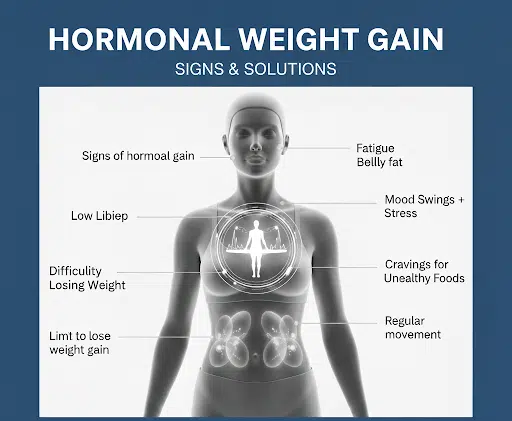
Finding Clues of Hormonal Weight Gain
It may be difficult to know whether you are experiencing hormonal weight gain or not. They have certain common things that may provide clues. Even though you may not have increased the fat much in your diet, you may experience the extra fat around the abdomen, hips, or thighs. Additional symptoms include being more fatigued, difficulty with sleep, moodiness, or a desire to eat some types of food. In case you find them, there is a possibility that hormones are involved.
The Truth about Hormonal Weight Gain in 20s
People believe that hormone change occurs later in life, but the hormonal weight gain in 20s is a normal occurrence. Even when young, stress, lack of sleep, certain drugs (such as birth control), and an unhealthy diet can affect your hormones. PCOS (polycystic ovary syndrome) is a condition that is also known to lead to weight gain and difficulty in losing weight after 20s and above.
Dress Your Body with the Help of Supplements for Hormonal Weight Gain
When you feel it might have something to do with hormones, some supplements for hormonal weight gain would do the trick. Magnesium can enhance sleep and reduce stress, whereas B vitamins enhance energy. Probiotics are also excellent for gut health, which is associated with hormone balance. Never use any new supplements without consulting your doctor to ensure that they are safe and appropriate for you. Complementary use of the supplements rather than substituting a healthy lifestyle.
Signs of Hormonal Weight Gain
One of the major signs of hormonal weight gain is due to lifestyle. Pay attention to whole and unprocessed foods that stabilize the blood sugar levels. Exercise (vigorous workouts) regularly in moderation; too much causes stress hormones. Get enough sleep and make a goal of 7- 9 hours on average every day. Learn to deal with stress, either through meditation, outdoor activities, or just taking time and peace. These measures can assist in the restoration of the normal balance of hormones.
FAQs
What can I do to prevent hormonal weight gain?
Pay attention to the whole-food diet, success in stress, sleep, and do the exercises most often, but not overdo it.
What makes you know whether you have gained weight hormonally?
The things to look at are belly fat, fatigue, moodiness, and not being able to lose weight despite efforts.
What is the ideal way of losing hormonal belly fat?
Get less stressed, sleep better, eat an anti-inflammatory diet, and incorporate strength training by moving regularly.
What is the appearance of hormonal weight gain?
It usually presents itself in the form of tough fat surrounding the stomach, hips, and inner thigh,s which cannot be cut.